A California landscape contractor breaks into every AI search surface — Google AI Overviews, AI Mode, Gemini, and ChatGPT — and watches the citations turn into real, qualified emails in the inbox.
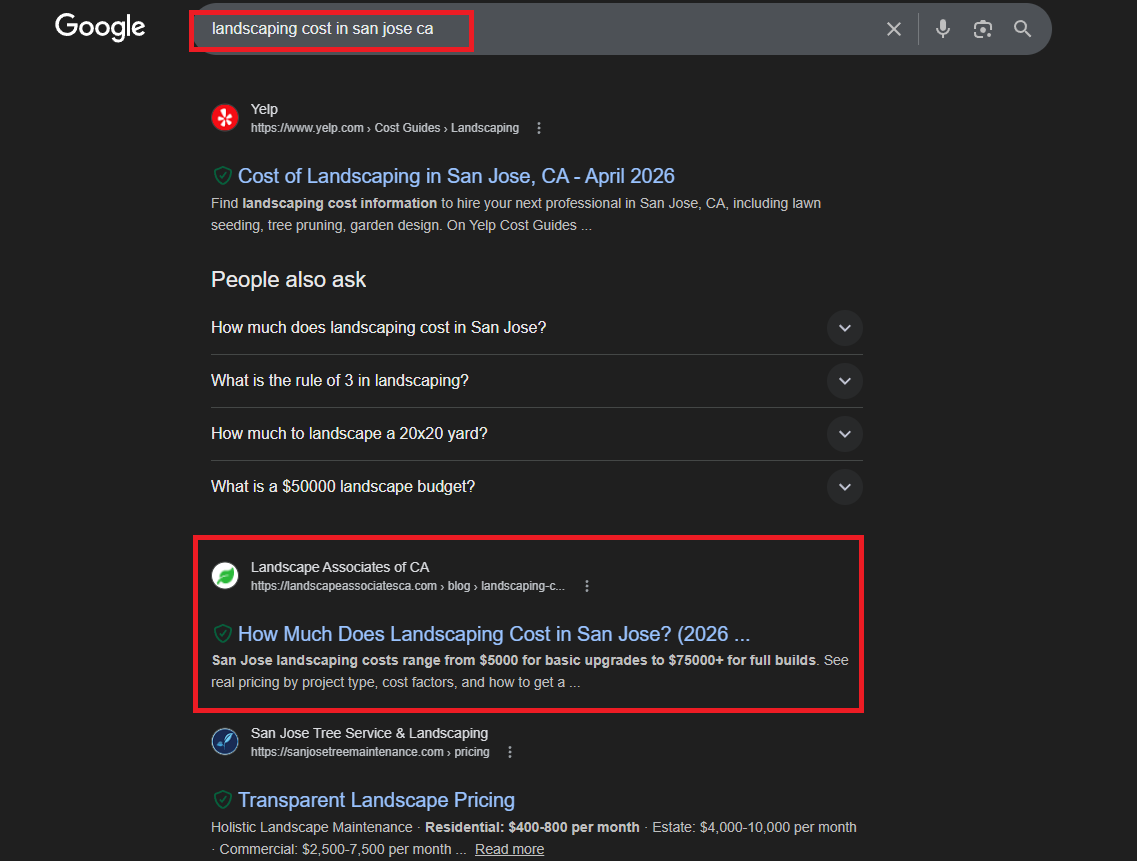
"Landscaping cost in San Jose." "Landscape contractors serving the Bay Area." Two of the most direct, highest-intent questions in the category. Both returned competitors. Neither returned Landscape Associates.
The site read fine to humans. To language models, the pricing, service scope, and geographic coverage were buried inside paragraphs — no Q&A blocks, no cost tables, no structured data the engines could quote.
Limited recent third-party signal tying the firm to specific California submarkets. In a vertical where AI engines lean heavily on local editorial trust, that gap is the difference between being recommended and being skipped.
The fix: build the answer pages, not the brochure pages.
City-by-city pricing pages with declarative cost ranges, scoped service breakdowns, and Q&A units engineered for verbatim extraction by every major LLM.
JSON-LD layered across the city service pages — service category, service area, price specification, and FAQ pairs surfaced exactly where the engines expect to find them.
Every city page rewritten to the exact query language buyers use. Internal linking architecture restructured to push topical authority into each California service-area URL.
Editorial placements, partner citations, and category mentions tying the brand to specific California submarkets — enough off-page weight for the engines to take the rebuild seriously.
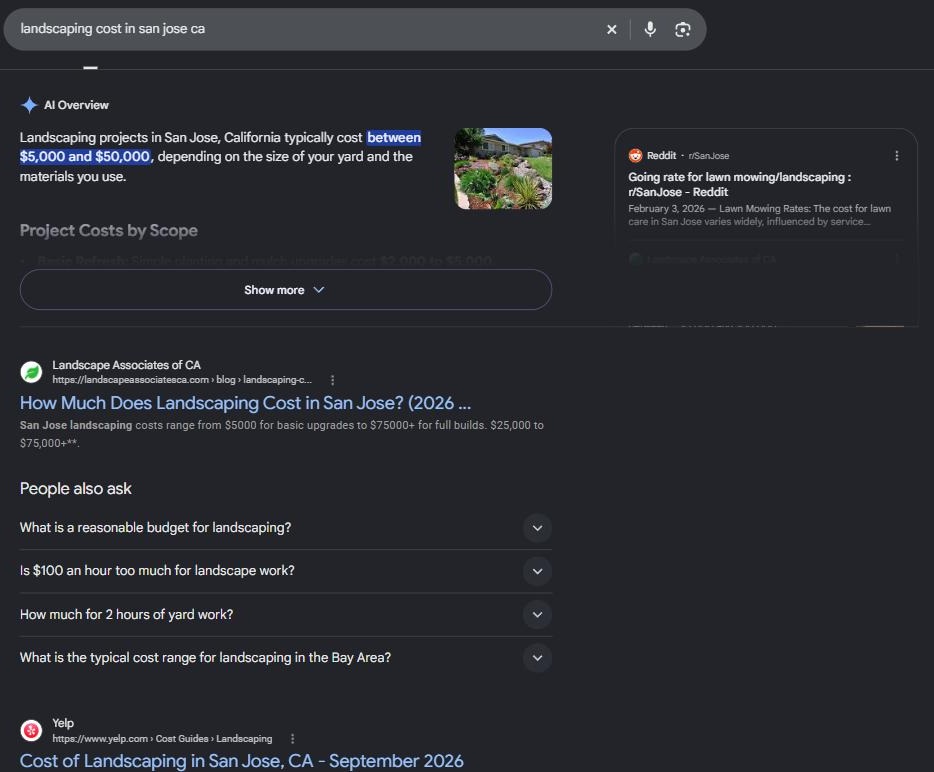
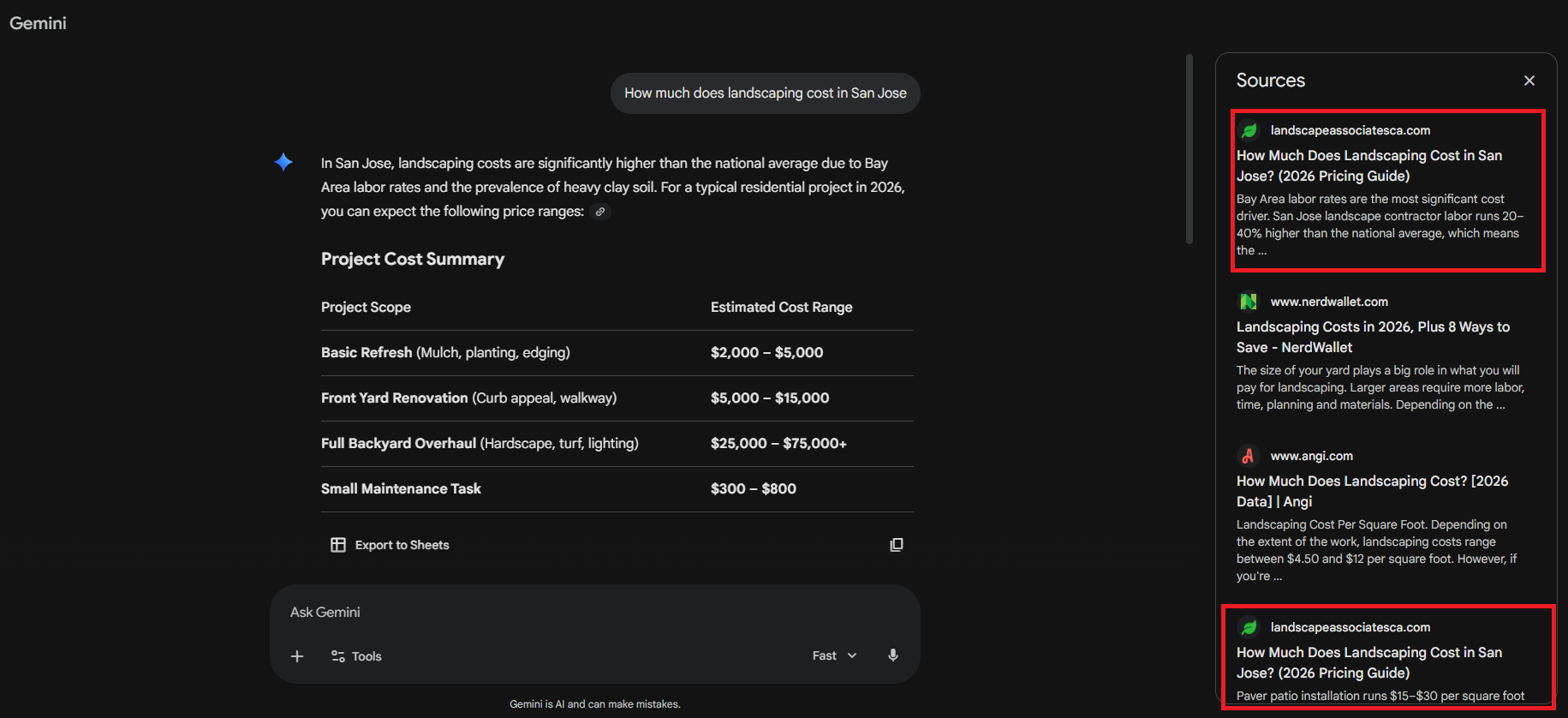
Surfaced as a top source for "landscaping cost in San Jose" — featured inside the AI Overview citation card.
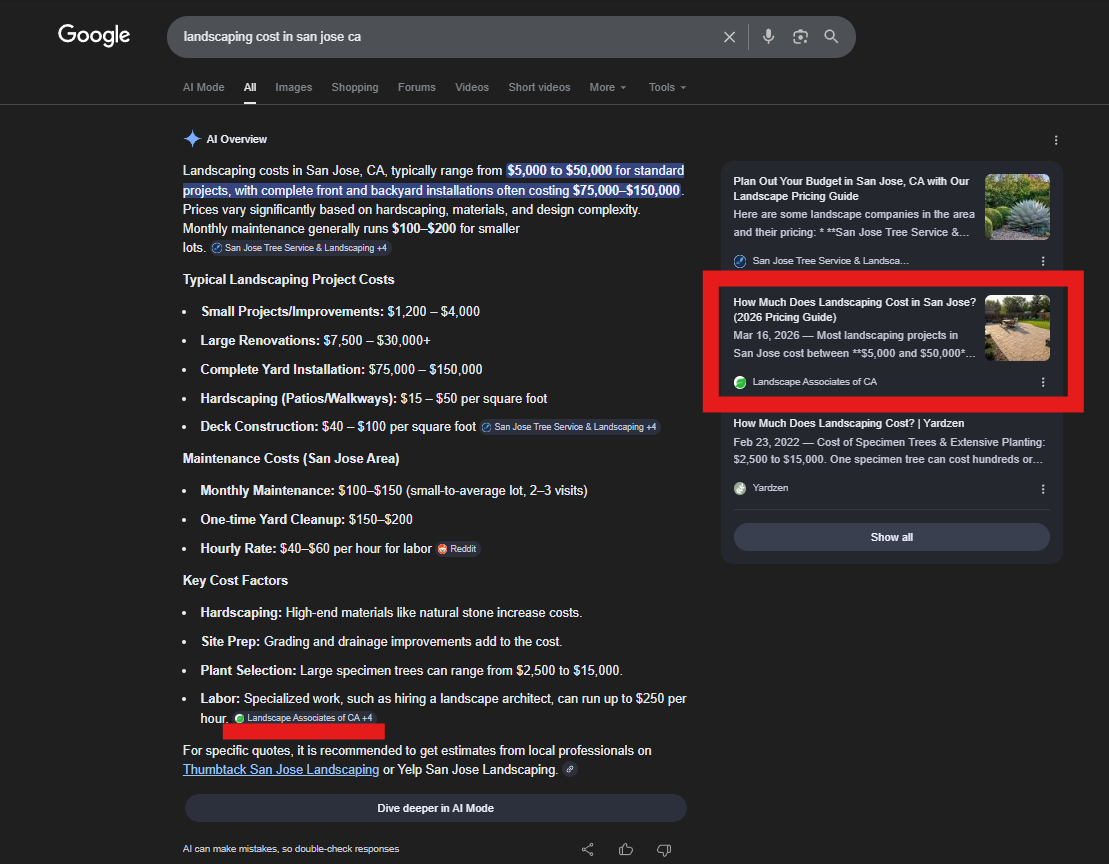
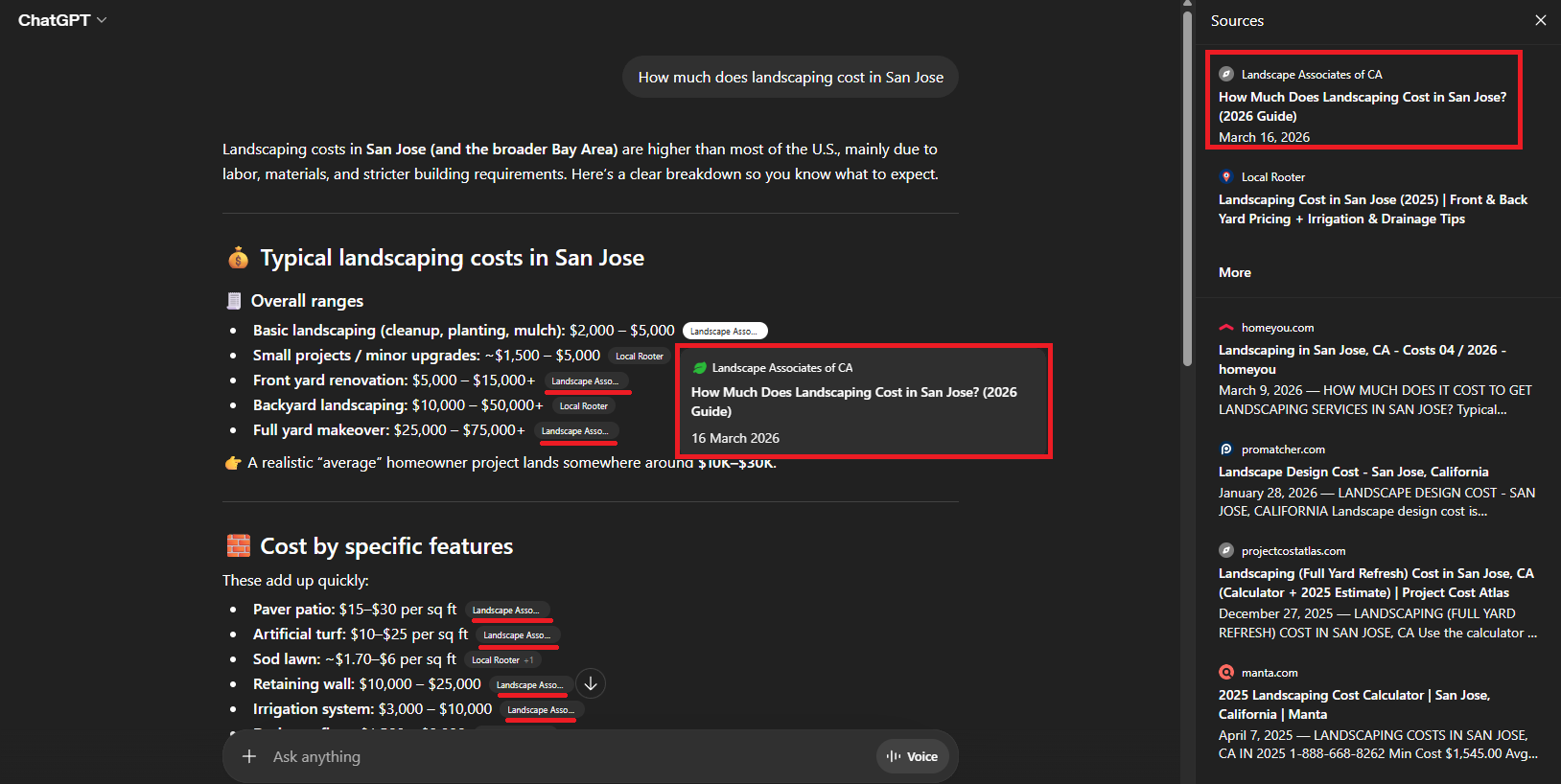
Pulled into the sidebar source rail for the San Jose cost answer as the lead pricing reference.
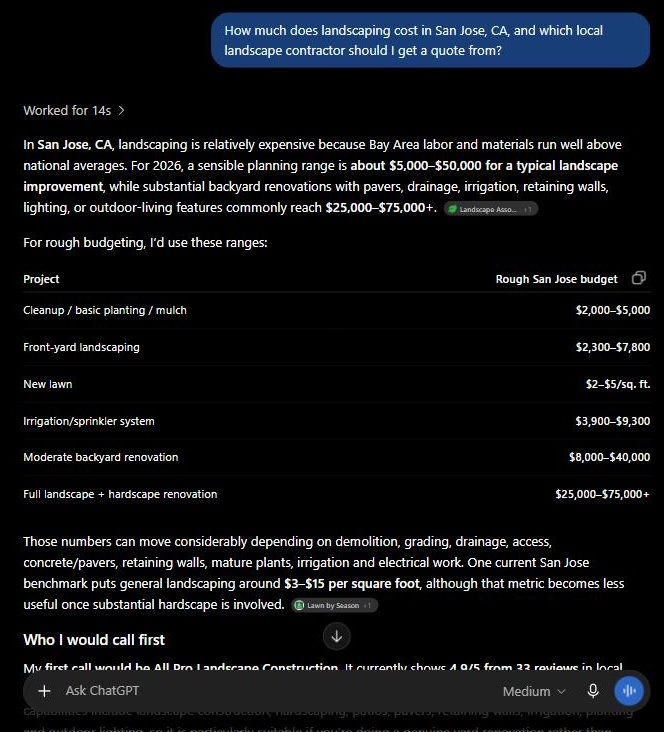
Named as a primary source for the San Jose landscaping cost answer — opening and closing citation slots in the rail.
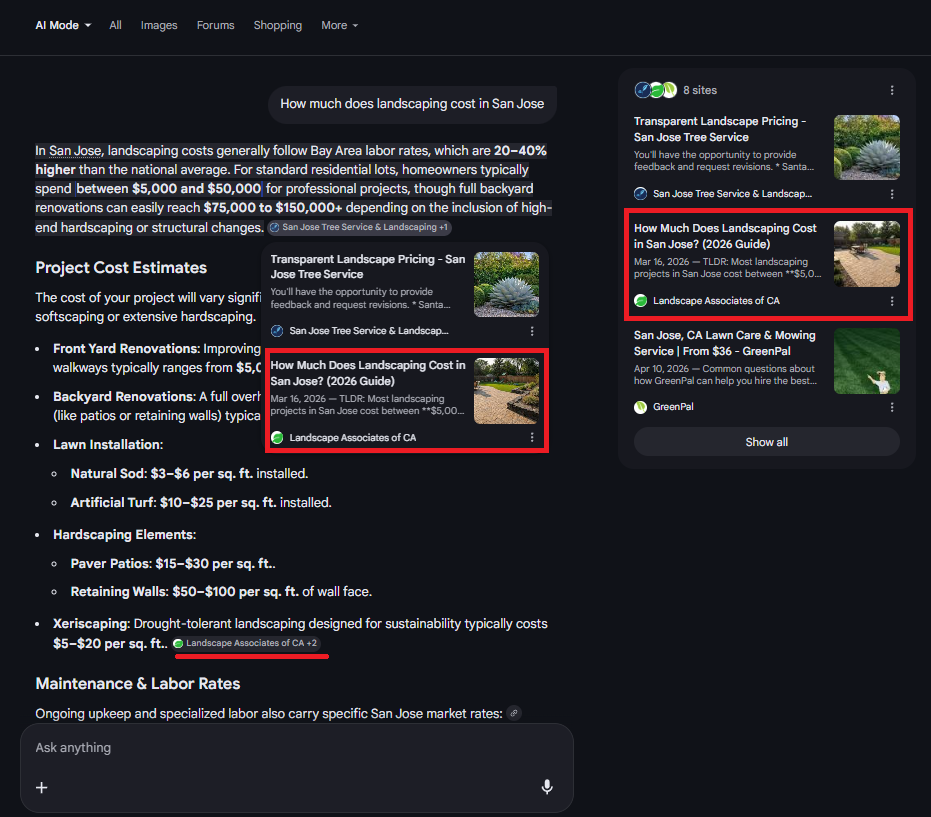
Cited inline for the San Jose cost answer and surfaced in the right-hand sources column.
A residential prospect arrives looking for lawn & yard clean-up plus ongoing maintenance — leaf and debris removal, weeding, general upkeep — and asks directly about availability and pricing. The classic recurring-revenue lead, delivered straight to the inbox.
A homeowner relocating to San Jose 95120 asks for a new sod design on the front yard and a new paving design on the driveway — and offers the address with permission to walk the site and quote. A real construction project, surfaced by the AI-driven channel before he even arrived in California.
Edward Chase opens with the line every visibility engineer waits to read. He spells out where the lead came from — and how the brand was framed before he ever clicked.
The California homeowner shopping for a landscape contractor no longer scrolls Yelp lists or directories. They ask Google for a price. They ask Gemini for a shortlist. They ask ChatGPT who serves their city. The answer that comes back is the answer they call — and the rest of the market is wallpaper. This case proved the second half of the Total Visibility thesis: a rebuilt set of answer pages, schema-fed and authority-supported, didn't just earn citations across every major AI surface and Google's organic page one. It put a contractor's name in the source slot for the cost question buyers were asking — then put real homeowners, with real budgets, addresses, and timelines, directly into the inbox. Being cited is the new ranking. Being contacted is the new conversion.
Established service business, $80k+/month, and tired of being invisible while AI hands the answer — and the lead — to a competitor? Let's talk about your version of this.
30 minutes · No pitch deck · Real talk about your visibility gap